
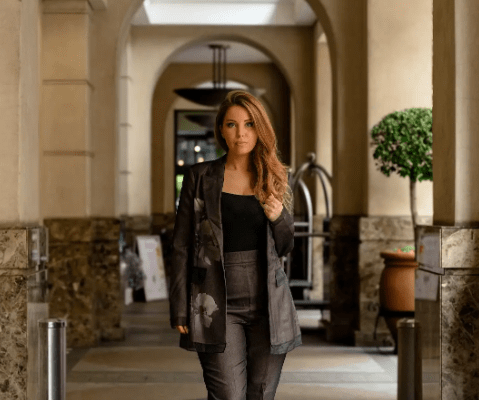
The brands AI recommends are already the ones vouched for on the wider web, and earning those recommendations comes down to earned PR, says Tamryn Geldenhuys, Reputation Strategist, Lemon Sorbet Marketing.
A Muck Rack analysis of more than 25 million citations across ChatGPT, Claude and Gemini found that earned media accounts for 84% of all AI citations. Ahrefs also did a study across 75,000 companies found that brand mentions were roughly three times more impactful than backlinks. Public relations has become the next wave of trust in the world of AI because, for most of its history, the work done by PR has earned trust with audiences through coverage and credibility. Now it earns trust with the machines the audiences ask first – especially in South Africa.
The audience here has moved rapidly on AI adoption with 70% of adults having used an AI chatbot[1]. The country is now in the lead in Africa in generative AI adoption with 23.1% of the working age population using generative AI tools compared with the 17.8% global average[2].
What does this mean for the South African brand? It changes what you’re competing for. First prize has become a brand mention inside the answer. Now the goal is to achieve this brand mention without falling into the keyword stuffing trap, but instead by creating gravitas and depth. Large language models (LLMs) weigh authority and agreement across many sources and then select those they deem trustworthy – the companies that are already being talked about on platforms people trust and use.
A lot of companies have turned to generative engine optimisation (GEO) and answer engine optimisation (AEO) with schema markup, cleaner site structures, faster pagers and tidier metadata, to achieve LLM results. While this work is important and relevant, making sites easier to read by machines, readability and credibility are very different things. And credibility scores highly with the LLMs.
PR work prioritises credibility. A brand earns citations by behaving like a source worth citing by publishing clear, accurate and useful material that a machine can lift and a person can verify. This approach holds a consistent identity across the web so the models know your brand and your earned coverage, commentary and third-party references from the outlets and experts the models already trust starts to build up your LLM visibility. Optimisation makes your brand legible, but reputation makes it recommended – the first can be done in a week, the rest is built over time and pays back more than once. Reaching a customer today, lifting search over months and establishing credibility layer by layer teaches the machine to name the brand.
When a supplier offers to place a brand inside an answer engine within weeks through technical work, you will get results but are they on the right premise? The machine is rewarding volume not trust, and trust is absolutely critical today. You want to win your discovery because when customers find you, whether it is online through traditional search or with an LLM, you want them to trust what you offer and who you are.
For South African brands, the opportunity is wide open. The MO Agency 2026 AI Visibility Report analysed 3,417 AI answers and 23. 684 citations across 19 industries and more than 260 brands and they found no South African brands scored higher than 75 out of 100 for AI visibility. This is room for brands to grow and expand and this can be built, systematically on a foundation of trust through genuine editorial credibility.
This doesn’t make GEO or AEO work irrelevant, rather these disciplines should run in parallel with PR as it is the latter that delivers the sustained, independently verified credibility required to earn LLM and customer trust.